
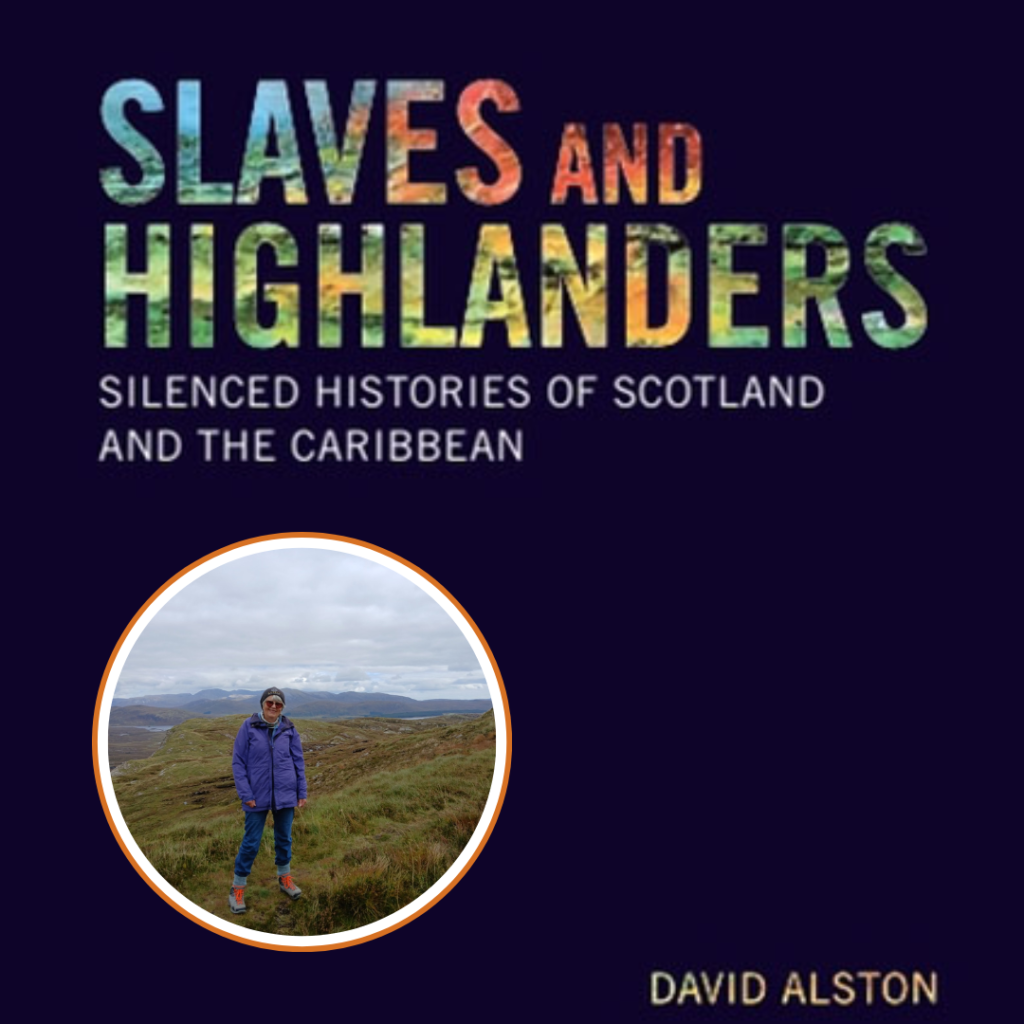
Slaves and Highlanders: Silenced Histories of Scotland and the Carribean by David Alston.
Review by Celia Fraser, TDC Volunteer

David Alston has assiduously and impressively conducted wide-ranging research for this book, gathering information about Africans who were enslaved—and their descendants—in cotton, sugar and coffee plantations, mainly in the Caribbean Islands and Guyana during the 18th and 19th centuries. Scots were heavily involved in the slave trade, which makes this book challenging to read but essential for understanding the extent to which ‘normal’ people can perpetrate crimes against fellow human beings. Although the book deals with complex and difficult issues, the author’s skills make it very readable.
The book is divided into four parts, of which the third focuses on the legacies of slavery in the north of Scotland. There, too many families were brutal, cruel, and immoral, sacrificing common humanity in the pursuit of profit. Too many who professed to be Christian traded in human misery. The book includes case studies that demonstrate horrific practices, including one about Rainey of Raasay, who was a son of the manse. He made a fortune in Demerara and then treated the residents of Raasay with cruel contempt.
Before reading this book I attended a talk by David Alston at Tain. He spoke fluently and movingly about the uncomfortable issue of slavery and the strong connections between the trafficking of slaves and the Highlands. An extraordinary amount of money was made which improved the fortunes of some families and some communities, but at a horrific cost.
I remember that he talked about visiting Guyana and driving past signs that mirrored the coast of the eastern highlands with names such as Cromarty, Tain, and Nigg. He spoke about a particular slave re-named Inverness – a man who never settled for slavery and rebelled against his new masters.
The book contains reference notes and a detailed index. I encourage people to read this book because it contributes to our awareness of the suffering that has shaped our history and surroundings