
Book of the Month: Pagan Symbols of the Picts
Book review of Pagan Symbols of the Picts by Stuart McHardy
Review by Rosie McLoughlin, TDC Volunteer
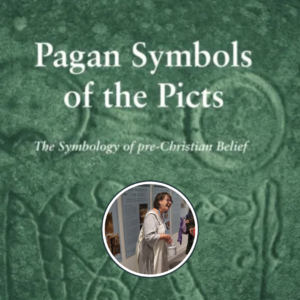
In our museum we have wonderful examples of Pictish artwork on the fragments housed in our treasury. If you would like to learn more about their meanings, then I would highly recommend this book. It is well written and very readable for those not looking for an academic tome. Stuart McHardy takes us through a history of the Picts and their links to other Celtic nations and other nations beyond. I was particularly interested in his discussions around oral traditions of passing information down through generations and how this related to the Picts and their standing stones. The stones were used as educational tools, as the focus for rituals and as landscape markers. He talks us through the three stages of development of standing stones:
- Class I – these are pre Christian and could date back to before the Iron Age. They had simply picked out symbols with one side of undressed stone.
- Class II – these had designs on both sides which showed elements of pagan and Christian belief, with some relief sculpture.
- Class III – these were carved later and show beautifully ornate biblical or hunting scenes and have complex relief carving.
McHardy then picks out individual symbols and explains their importance to Pictish society and what they could possibly mean in their setting on stone. He links up stories from other Celtic nations and shows where there are similar stories and symbols across Europe. I particularly liked the references to the King Arthur stories and how many Celtic nations share themes from these in their own cultures.
Some of McHardy’s favourite themes throughout the book include his theory that the Picts were a society which revered women until institutionalised Christianity placed men as the head of religion, family and society. He argues that Pictish royalty was passed on through the maternal line – with kings being the sons of Queens, or men who married Queens. He also explores pagan beliefs in and worship of goddesses who were deeply tied to the landscape and the weather. He looks at the duality of their nature: Cailleach – the giant, ugly, fearsome hag, who represented winter; and Bride – young, golden, fruitful, who represented summer. Could they have been two sides of the same goddess?
If you want to find out if you agree with him, you’ll have to read his book!